
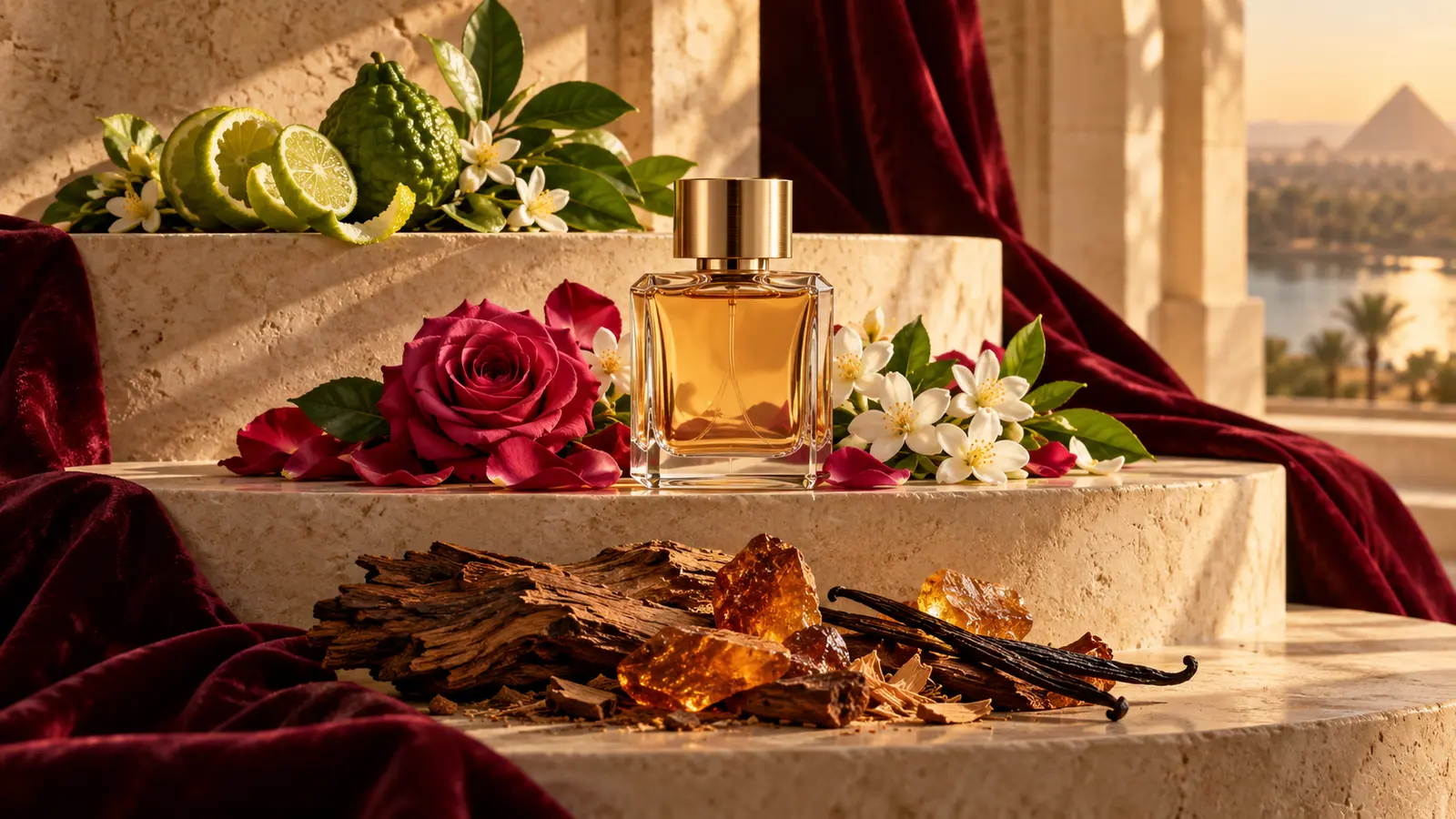
A fragrance may feel bright in the first minute, then become softer, warmer, or sweeter as it settles. It has not suddenly turned into a different product. Fragrance materials are not perceived or released at exactly the same rate, which is why perfumers and retailers use the language of top, heart, and base notes.
Top notes: the opening impression
Top notes are the aromas you notice first. They are often bright or fresh—citrus, green, aromatic, or airy effects are common examples—because many of the materials that create them are noticed quickly and fade sooner than heavier components.
The opening matters, but it is not enough to judge the complete fragrance. Buying from the first few seconds alone can mean missing the part you will actually wear for longer.
Heart notes: the composition taking shape
As the opening calms down, the heart becomes clearer. Floral, fruity, spicy, or other facets may connect the first impression to the deeper base. The heart often gives the fragrance a more coherent identity after the initial lift.
There is no universal minute when the heart “starts.” The stages overlap, and heart or base materials may be noticeable from the beginning. The note pyramid is a communication tool, not a stopwatch.
Base notes: the slower, deeper trail
Base notes commonly include slower-evaporating and longer-lasting materials such as woods, musks, amber effects, resins, and sweet facets. They become more noticeable as the fragrance settles and may shift the overall impression from fresh to warm or from light to more substantial.
“Base note” does not guarantee a fixed number of hours. Actual longevity depends on the complete formula, amount applied, skin, weather, and use.
Why can the same fragrance feel different?
- A paper blotter does not behave like skin.
- Temperature and surrounding air affect how a scent diffuses.
- The amount and placement of sprays change the experience.
- Your nose can become accustomed to a scent even while other people can still notice it.
A better way to test
Notice the opening, then return to the fragrance later instead of deciding immediately. When comparing two options, label the blotters and revisit them calmly. Once you have a favourite, wear it on skin during an ordinary day before making the final choice.
The takeaway
Top, heart, and base are not three isolated perfumes. They are a simple way to describe one developing composition with overlapping stages. The right fragrance is not only the one that grabs your attention at first; it is the one you continue to enjoy as it unfolds.